Courtesy of The Estate of Barbara Hammer

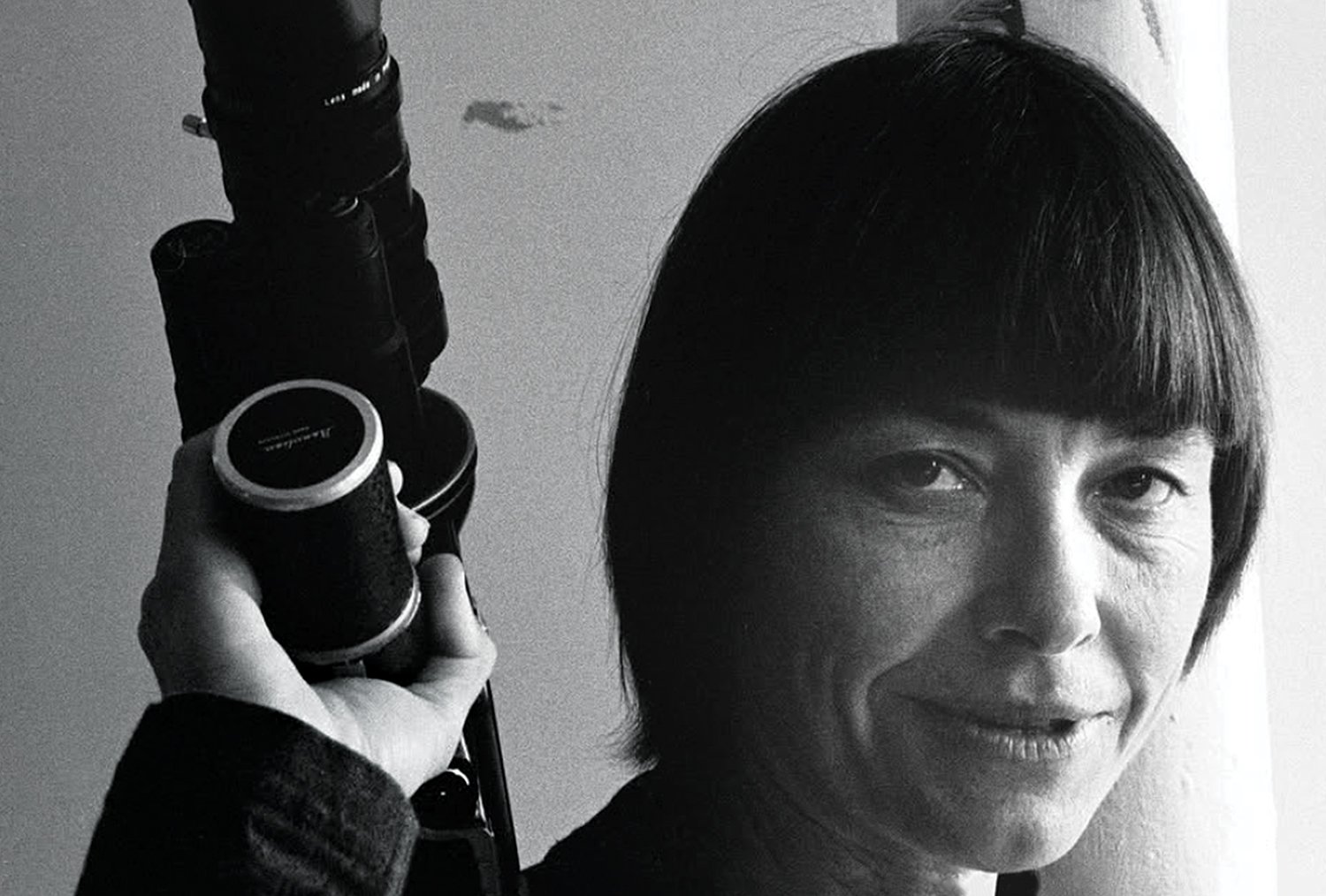
This is the question posed by Barbara Hammer, the prolific lesbian artist and filmmaker, in one of her own films. It is also the question that Director Brydie O’Connor attempts to answer in her documentary Barbara Forever. Apart from a few scenes featuring Hammer’s widow Florrie R. Burke, Barbara Forever is told entirely through the artist’s own footage and voice. O’Connor faced the immense task of parsing through Hammer’s archive, which spans almost five decades and currently lives in over 100 boxes now housed in the Beinecke Rare Book and Manuscript Library at Yale University. Aside from Hammer’s many “official” films, such as her groundbreaking Dyketactics (1974) and the feature-length Nitrate Kisses (1992), she chronicled her life with an almost spiritual devotion. In an astounding number of outtakes and short videos, Hammer filmed her body, her home, her lovers, her friends, and ultimately, her own death.
Hammer was on the vanguard of blending the personal and the public through film. Even more radical, she showed queer bodies and lesbian sex as erotic and pleasurable. Representation, we are reminded, matters. Early in the documentary, as Hammer experiences lesbian sex for the first time (and, in fact, hears the word “lesbian” for the first time at the age of thirty), she ruminates on the strange experience of knowing something without having the words for it, and in turn, experiencing something she had never seen. The desire to depict that which didn’t seem to exist on camera yet led to her first short film, the lesbian erotica Dyketactics. Popular in small, local circles, it would be another couple decades before Hammer saw anything close to mainstream success.
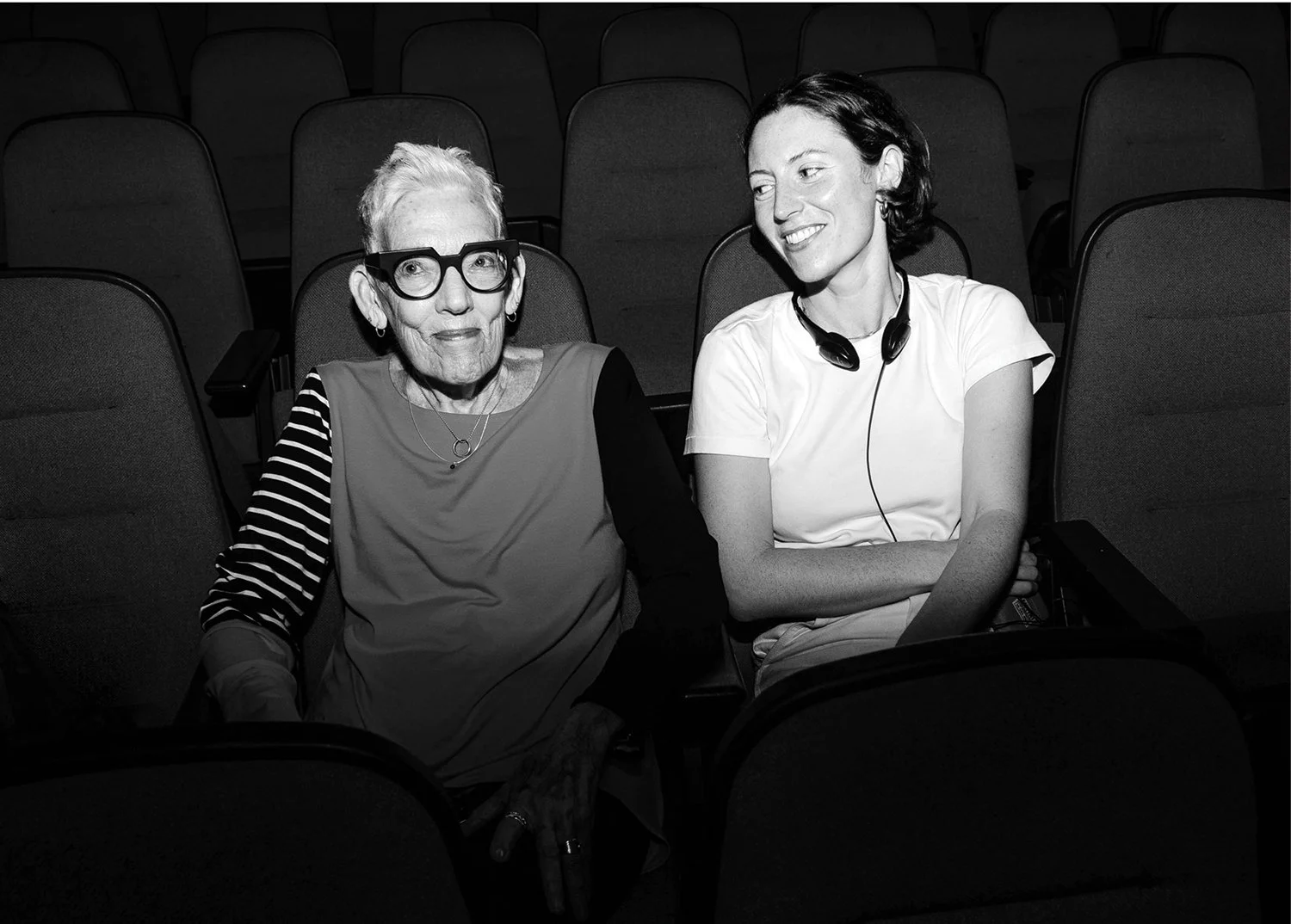
From L: Florrie R. Burke and Barbara Forever Director, Brydie O’Connor. Photo by Marisa Chafetz
In Barbara Forever, O’Connor curates footage to tell the story of Hammer’s life. We see her queer awakening and declaration of commitment to the life of an artist. We watch lovers — some confident, some reserved, some exasperated — come and go until Hammer meets Burke, who would become her partner for over thirty years. Hammer talks about her ambition, her lack of boundaries between work and life, and her frustration with the art world for taking so long to take her seriously. She films her body aging. She’s high energy and upbeat (“wired,” as she says) almost until the very end, when she begins to die of ovarian cancer, a time which is depicted in the final section of the documentary with great intimacy.
In this interview, I spoke with O’Connor about her process for tackling Hammer’s vast archive and finding the narrative, the role of queer cinema today, and the ways in which Hammer has influenced O’Connor’s own work.
EC Flamming: Well, would it be fair to say that you’ve had a pretty crazy year?
Brydie O’Connor: It has been a wonderful last seven months. It’s been so fun. It’s been a whirlwind. It’s still surreal that the movie is even finished, because I was working on it for so long, and it had been a personal project — a passion project — for so long. It’s like you’re just kind of pushing the boulder up the mountain, even though you love that boulder. So it’s really cool that it’s out and doing its thing. I feel like I sent a kid to college or something. I still help it a little bit.
ECF: Totally. I mean, how are you feeling now that you’re boulder-less? Or the boulder is rolling down the other way?
BO: Well, I really love the film, honestly. I really love the movie that we made, and that is something I feel really proud of. It’s the thing that people are responding to, first and foremost. I feel so proud that Florrie Burke, Barbara’s partner, really loves it and feels that it is so true to Barbara. And so, yeah, it feels like a different part of the process. Now it’s talking about the film a lot and reflecting on making the film. This is my first feature film, so it’s all a new experience to me — figuring out how to be the best advocate for the film and getting as many people to see it as possible. I’m a filmmaker, but I also feel like now I’m a filmmaker and a publicist for the film.
ECF: Early in the documentary Barbara says, “My life has been lived in film.” And she also says, “It’s more than my life; it’s a history of queer art.” And then we see this footage of Barbara contemplating her archive as it’s about to go to Yale, where it is now. In that scene, we see dozens of archival boxes and piles and piles of film, photo books, and portfolios. And for me, probably like anyone who’s ever dealt with a lot of archival material before, I just kind of gasped at the immensity of it. I would love to know your strategy for approaching Barbara’s archive. Where did you even begin?
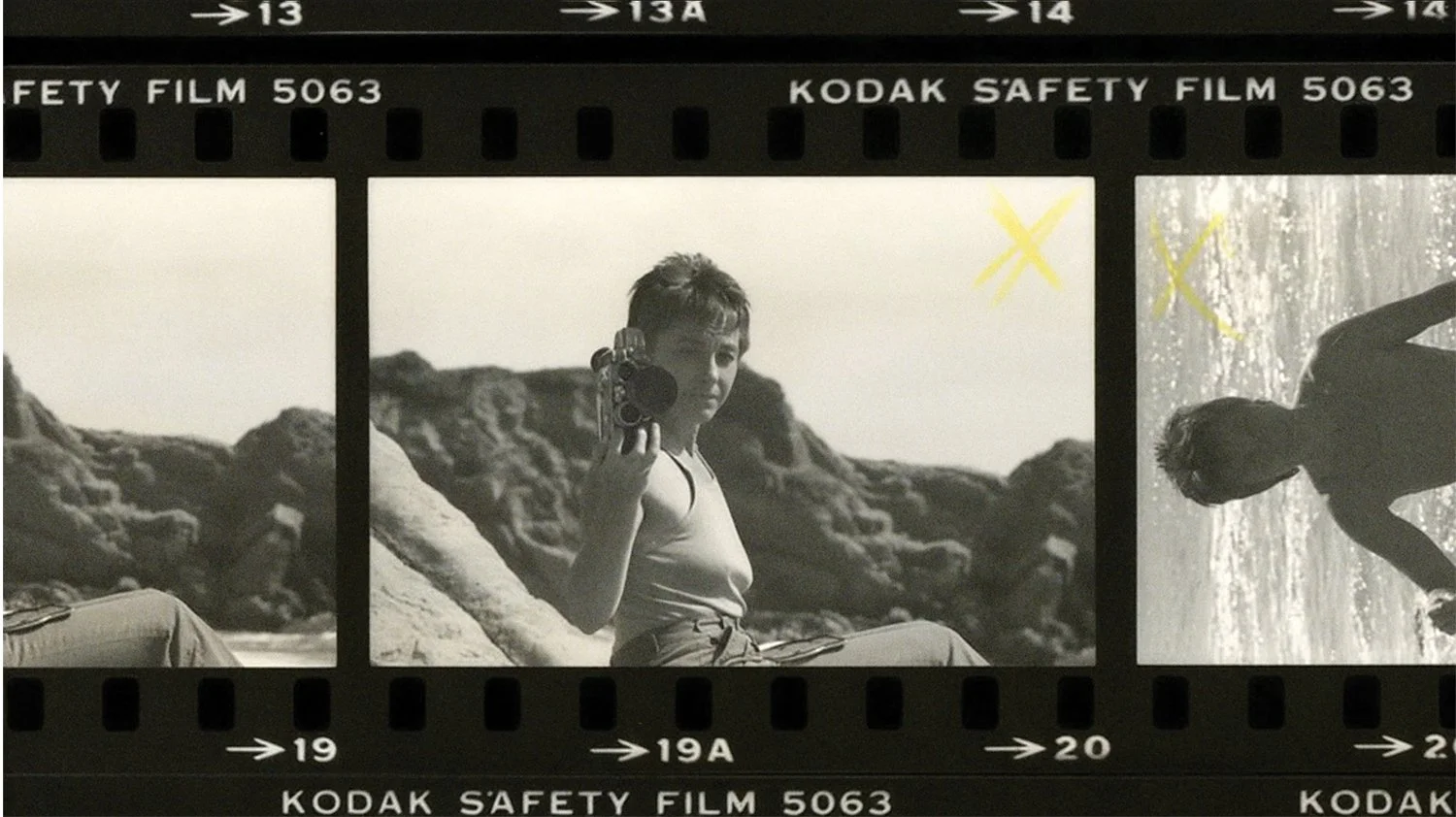
BO: So, I’ve been collecting pieces from Barbara’s archive since 2019. Barbara’s formal paper archive is held at the Beinecke Rare Book and Manuscript Library at Yale. But in 2019, when I connected with Florrie, there was still so much of Barbara’s archive that hadn’t gone to Yale — material Barbara had left behind in her studio at Westbeth, which Florrie then cleaned out and brought back to their home in the West Village. So I spent a lot of time in those first two or three years digitizing that material and organizing it as it came in. The first thing my editor, Matt Hixon, and I did when we started working in earnest on the film was watch all of the material — over 400 hours of film — in the first six months.
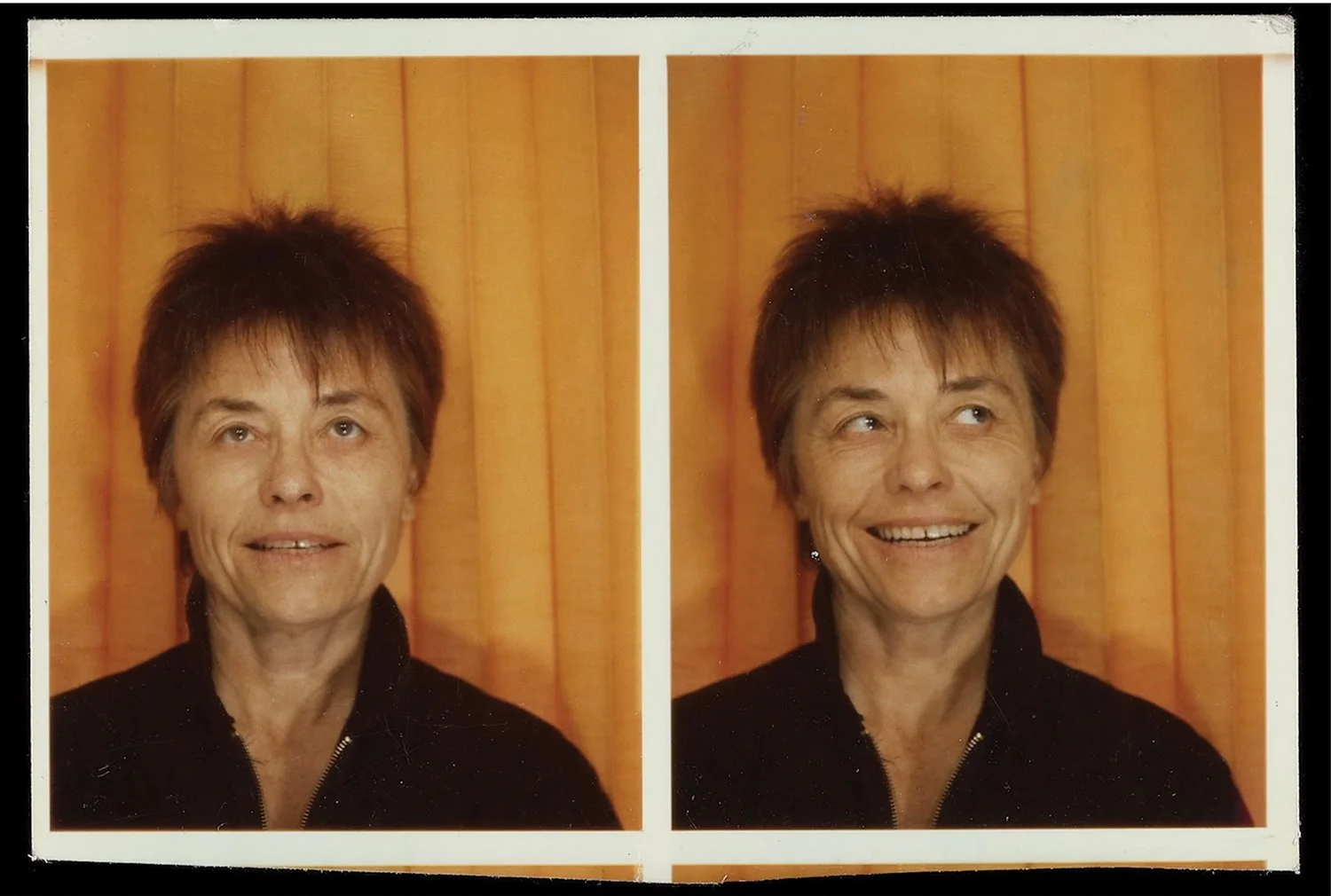
Courtesy of The Estate of Barbara Hammer
I have a background as an archival producer, so even before we watched it all, I compiled everything, relabeled everything, and put it in a spreadsheet, as I would on any project I’m archival producing, so that it was easy to deal with and work with. By the time my editor and I started watching, I felt like I could set aside the organizational process and not have to deal with where things were. I had already spent focused effort on that first phase.
Then I could work with the material more associatively and be more responsive, instead of feeling like I was so in the weeds with the organization and literally finding material. I’m really glad I approached it as a two-step process. I think that was key to not feeling so overwhelmed.
ECF: So step one was organize, step two was kind of absorb.
BO: Yeah. Even though there were pieces of material I had seen a lot over the years — as I was collecting it, I would see it as it came in, or some of it we had worked with for the short — watching it all in one fell swoop, within the context of the ideas that I was starting to think about for Barbara Forever specifically, really helped me locate myself. Okay, I’m going to think about the context in which I’m viewing all this material and go from there.
I watched it based on where it came from, so it’s not like I watched it chronologically. It was still kind of existing in this constellation of material. But I think that was helpful because it created these accidental, “moments” in which material was associated with other material — either by accident, or because Barbara had it together on one of her drives. So it was really helpful to absorb and digest all of that material within the context of the ideas of Barbara Forever.
ECF: Early in the documentary she says a lesbian film is not going to follow a traditional story. So she’s not interested in traditional narrative structure. She never was, because that would not have been an accurate reflection of her life — it just wasn’t something she was interested in. When it comes to storytelling, crafting a narrative, and telling the story of Barbara’s life and legacy through her archival footage, how did you decide on the narrative arc that we see in Barbara Forever?
BO: Well, I kept coming back to: what is it that I felt so connected to Barbara Hammer about? What was that thing I kept coming back to her for? And that was the fact that Barbara picked up a camera and just started filming her life, her body, the things that held her attention, the things she was interested in; the fact that she did that without formal training. She was experimenting and learning by doing.
And, of course, as a lesbian and a lesbian filmmaker, I was really interested in this idea of alternative history making and alternative methods of history making, and in what it was about her and her practice — her constantly returning to that self-reflection. That was the guiding question of the film. That’s what I felt so moved by when I learned about Barbara and her work.
She had over 85 films. She was very curious, and she explored a lot of different topics in her work. But translating personal experience — her internal experience — to the external felt so specific, and it was a through-line over the course of her five-and-a-half-decade career.
ECF: Do you remember the first Barbara Hammer work you saw?
Courtesy of The Estate of Barbara Hammer
BO: Well, I learned about her before I saw her films. I was writing my thesis, focusing on queer cinema and figuring out what filmmakers or films I would focus on, and when I put into Google, “lesbian films by lesbian filmmakers,” of course it’s Barbara. So I actually had to write to her — I had to email her to even get her DVDs and see her work.
One of the DVDs she sent me was a 70s compilation, and I think the first thing I watched was Dyketactics. I had read so much about it; it’s such an iconic film. And, of course, it struck a note with my own research interest: her filming her life and her community, and then translating that into an avant-garde cinematic language.
I think the second film I watched was Superdyke Meets Madame X, which I really love. It’s one of my very favorite films of hers. I loved that it felt more experimental in its process than in its output. It’s pretty straightforward on videotape — not her typical optical stylistic experimentation — but the process of filming every single meeting, every time she saw Max Almy, felt really interesting to me, too. She took her work very seriously, but she was able to shed this preciousness about her films, which I think gave her a lot of freedom to experiment in different ways. So those were the first two.
ECF: When I was watching Barbara Forever, the overarching emotion of the film, to me, is joy. It’s an unbelievably joyful film. You have the joy of leaving your husband, the aha moment of recognizing your sexuality and reveling in it, the pleasure and joy of creation, and then the joy of her creative success.
But during the period when she was making some of her most famous works — the 70s and 80s — we also know that it was a time of pretty extreme conflict and violence toward the queer community. There was the infamous infighting going on within second-wave feminism and lesbian groups. Meanwhile, you have Anita Bryant, the Reagan years, the AIDS epidemic, and Dyketactics was made five years after the Stonewall riots.
So most of that historical context — and this isn’t a criticism — is left out of the documentary, or alluded to a little bit, but it’s not really there. Was that an intentional choice, to keep the focus on joy, pleasure, and creation, or was that more a result of what was in the archival material she produced?
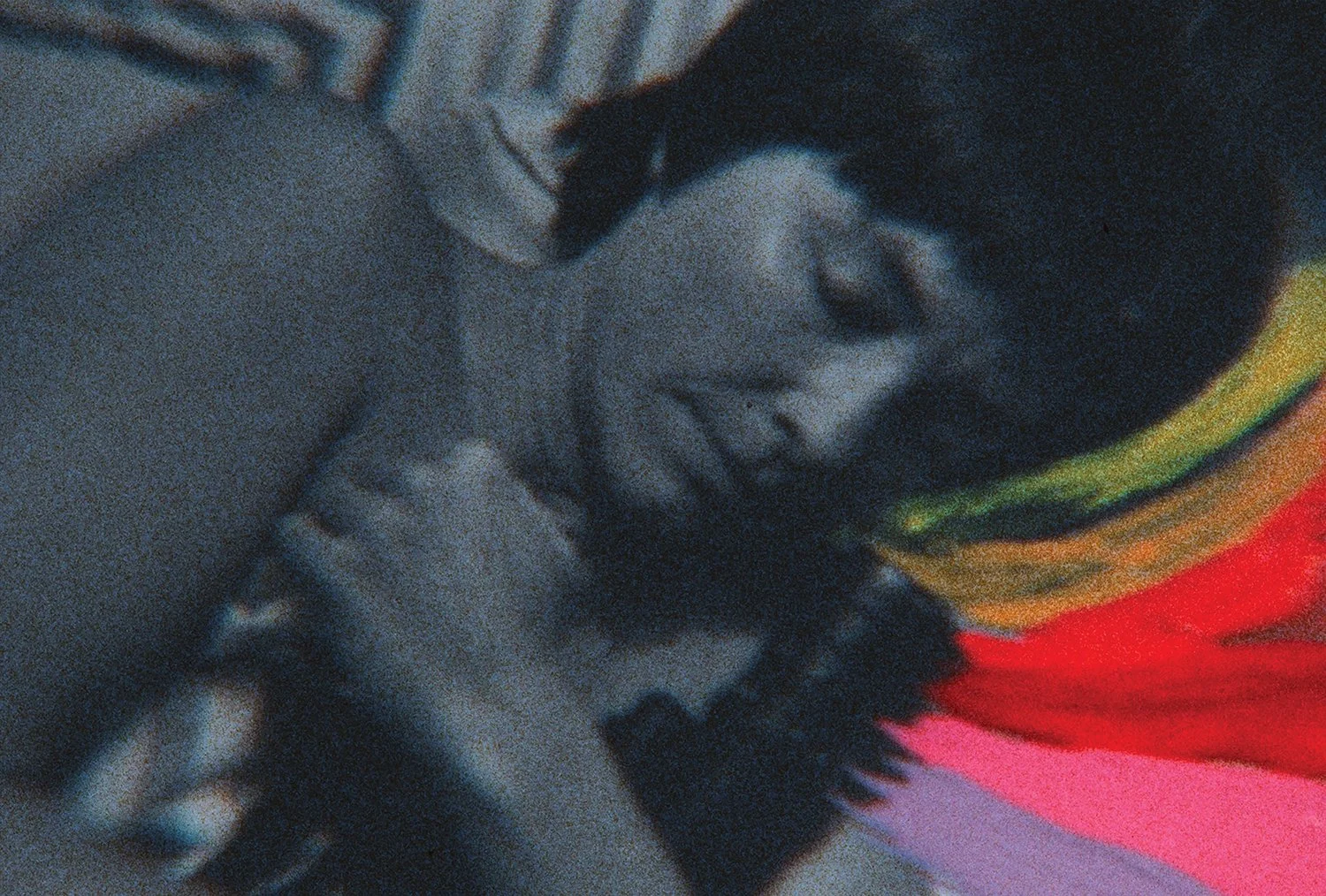
BO: Yeah, this was very intentional and something I considered a lot. At its core, I wanted to show what Barbara was focusing on and what she was turning her camera toward. That was the organizing principle of those archival chapters. Barbara was not filming clippings or things about the Stonewall riots, right? She wasn’t directly engaging in her practice with, let’s say, the Stonewall uprising. So I wanted to follow Barbara’s lens and her experience in the world the way that she was experiencing it, while providing counterpoints within the archive that could check Barbara to some degree — to make her a more reliable or unreliable narrator in different moments.
Courtesy of The Estate of Barbara Hammer
For example, in the 70s, instead of showing archival material of violence against women and queer women during second-wave feminism, we focused more on what Barbara herself was focused on. She really cared about social issues that affected her and her community. I think she was responding in a very personal way, and her art was a response to that.
The counterpoints we provide in the 70s are things like newspaper articles saying, essentially, “Her films may not have anything of substance; they don’t really mean anything.” People weren’t really getting it, and that was Barbara’s experience. We also made the conscious decision to trust our audience with some of that historical context. We had earlier versions where we included more literal depictions of homophobia and misogyny, but within the perspective of the film, it started to feel like hitting the viewer over the head.
And so that led us back to leaning into Barbara’s experience. Because we don’t see that imagery, one of the interesting takeaways is how much joy there is, and how persistent that feeling is throughout the film.
Barbara was very socially conscious, very aware of the world, very involved. But I think she made a conscious choice that her way of intervening in the world was by creating her films, and that was her contribution. So that was intentional.
ECF: I think that strategy of showing radical joy on film was pretty transgressive. Certainly at the time she was making those films, people weren’t really doing that.
BO: I also think a guardrail for the edit became that, since we were following Barbara’s lens and perspective, we wanted to use Barbara’s footage almost exclusively. There are only a few shots — I could count on one hand the shots licensed from elsewhere that weren’t Barbara’s.
ECF: The final act of the documentary focuses on the years in which she was fighting terminal ovarian cancer. We just talked about joy in the film, and certainly she was able to find joy in dying. There’s an incredible quote — something about the art of dying being the same as the art of living — which I really love.
But the final act, maybe the last 25 minutes or so, in which she’s filming herself dying and contemplating leaving the world and leaving her work, is painful to watch. And it’s painful to see Florrie Burke’s grief, which feels still very much present. What was your experience of producing that section of the film?
BO: It’s really emotional for a couple of reasons. We literally go through losing Barbara with her. And at the same time, we go through losing Barbara with Florrie. It’s especially emotional for me because I’m so close with Florrie. We filmed one-on-one together in the Evidentiary Bodies installation, and that process was very emotional as well.
Florrie and I talked a lot about Barbara’s experience with death in those last years of her life — she was living with ovarian cancer for 13 years — and I was incredibly grateful for her openness in talking about that. Barbara says — “sorry, it’s gonna be loud for a second” — near the beginning of the third act, during the cancer treatment and chemo sequence, that filming her decaying body is breaking another invisible barrier: looking at, filming, and showing things that are taboo and that people don’t necessarily want to see.
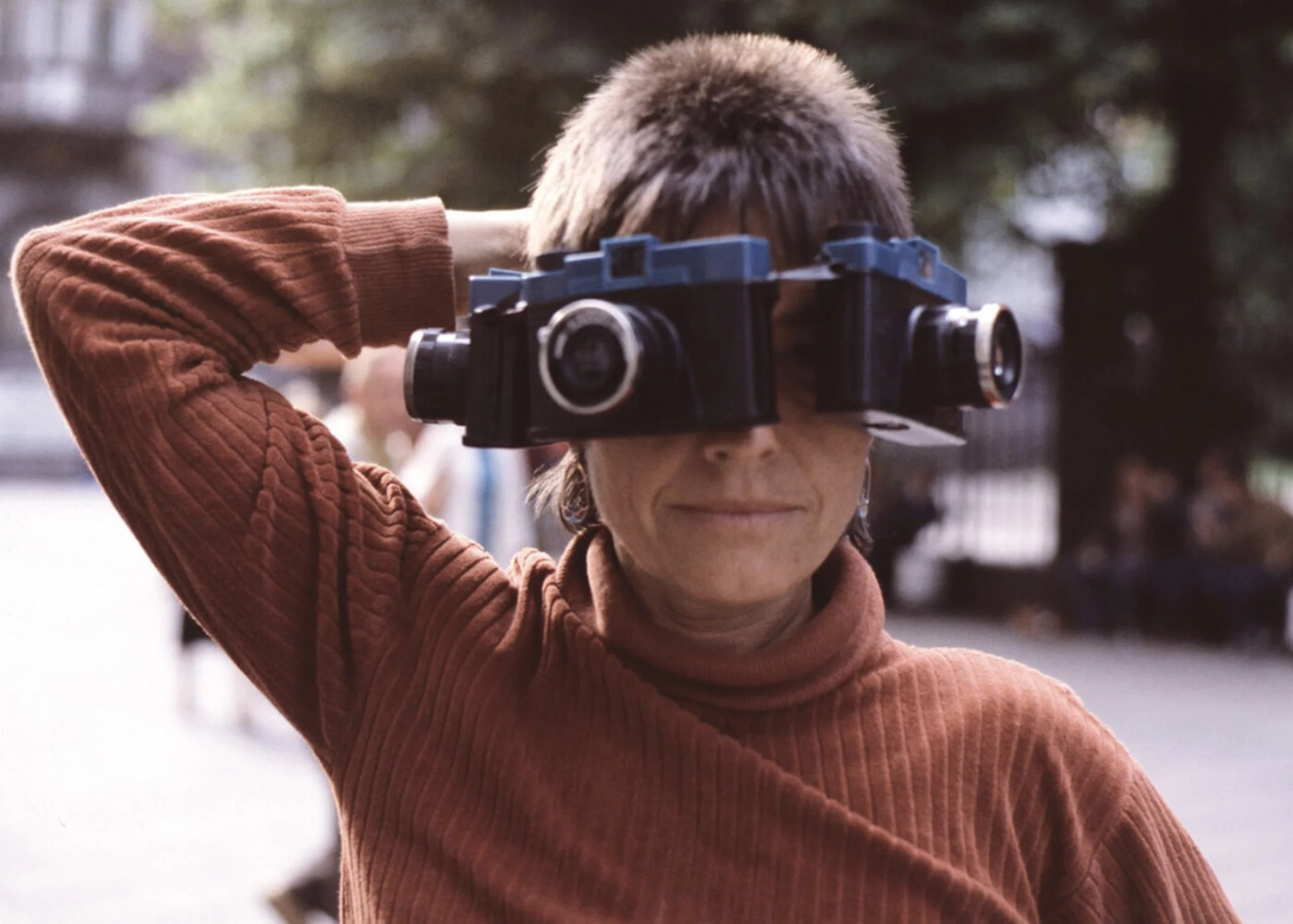
Performance view of Barbara Hammer, Camerawoman, 1980, color photograph, Ny Carlsberg Glyptotek, Copenhagen. © 2026. Courtesy of The Estate of Barbara Hammer
So there was also this feeling of: this is hard to look at, this is hard to experience, but Barbara felt it was really important for this to exist, and for people to look at something that may be difficult to look at, because it’s simply part of life.
There’s even a shot in that sequence from a surgical camera, which came from a seven-hour tape of a surgery Barbara went through and saved in her archive and... That’s one of the most emotional moments of the film to me, because we’re literally entering her body. And shortly after, we start seeing a sequence where the film itself — the emulsion — seems to be decaying along with her body. It’s so emotional. But it was very important to Barbara that people engage with that part of her embodied experience. I’ve seen the film so many times, but that last half hour is still very emotional. There’s not a time I’ve watched it and not really felt it.
ECF: We’re in this weird time right now where there’s a certain kind of influencer on social media filming themselves dying. It’s become its own category. We have unprecedented access to watching people document their own deaths, and I think artists were certainly among the first people doing that. I don’t really know what it means that it’s so public now, but it’s been on my mind.
BO: Barbara had an idea at one point that she really wanted to die in a gallery. She never really got into the logistics of that, mainly because Florrie Burke was like, “No, there’s no way. It’s not happening.” And eventually, when she was at home, I think Barbara was like, “I’m glad I’m not doing that.”
But I think she did have that impulse. She wanted people to engage with things that are hard to deal with, and to crack people open in that way. One of the things I’m most inspired by in Barbara is the way she took on change — full speed ahead. She was so excited by the circumstances in life that forced her to reinvent herself. Dying was one of those instances in a long line of things that she took on as a period of change, with excitement and curiosity.
ECF: I really admire the way Barbara embraced change, like you were saying, and the way she confronted her own death. She was a brave person. I remember watching this and thinking, I don’t know if I could have done that the way she did it.
As you were going through this immense archive — you did the organization, then you absorbed it, and then you storyboarded it out — did you find anything that surprised you?
BO: There were definitely moments when I was like, wow. We literally had a material bucket called “Magic, Barbara Magic” — those beautiful, I-can’t-believe-this-is-recorded moments. But what always surprised me was that, while Barbara was so open, she was also curating herself to some degree. She was shaping what she envisioned for her career because she believed in what her work had to say and in the value of her filmography at large.
One of the things I did very early on was create a cradle-to-grave radio edit of Barbara telling her whole life story in all these different ways. So it would be “story of my birth,” and then she’d tell that story five times in five different interviews. It was a kind of baseline; you could pull transcripts. There were instances where she had a professional schtick, which I’m relating to now. I talk about the movie so much; there are things you gravitate toward. But I was always surprised when I heard her say something I’d never heard in another transcript, interview, or recording.
Barbara didn’t act like she wasn’t afraid. She certainly didn’t act like she was immune to fear. I would say the way she handled her death and the process of dying was very brave, but I don’t think she viewed it that way. I think she saw it as something she simply had to do. So I don’t want to say she was brave and fearless, because she was more like, I’m dealing with the hand that was dealt to me in the way that I know how, which is full steam ahead.
But there was one line that surprised me. In the film she says, “Fear came in last night. And I hadn’t been feeling fear.” Then she turns around, her hands go up, she surrenders, and she says, “And I had to let go of that, too.”
That is so emotional to me, and it was so surprising when I heard it because there weren’t many moments where she stopped and acknowledged something like that so directly. It felt like a moment where — I’m imagining this — but her humanity took over for a moment: fear came in last night, but then what is there to do but let go of that, too? I had never heard her say something like that in another interview. And I think that feeds this other burning question I’ve always had about Barbara, and still do: where does the personal end and the professional begin? That line is very blurred for her. Even in her public persona — the way she talked about her work and shared herself with the public — she was very, very open. But there’s a line, of course.
ECF: I feel like we’re in a moment where art can be extremely confessional, extremely personal. How do you feel about that?
BO: I’ve made one personal film with my own archive, and I really enjoyed the process because I made it in a lab, so I had a very close cohort and advisors. But it’s not something I feel totally called to do again. I think that mapping myself onto a documentary — through what I’m focusing on within the story — or even onto scripted work is how I feel close to my work. I don’t need to be working with images of myself in the way that Barbara did.
But this is maybe worth mentioning, because I had the piece up at ARTS Southeast for a month: The Fault Line was my personal piece, and probably my most experimental film as well. It’s a hybrid film. I cast an actor to play my estranged mother and reenacted our archival tapes, which were projected into the scene. I wanted to make that film for myself, but I think part of me was subconsciously thinking: okay, if I’m going to be doing this with someone else’s life and someone else’s personal images, then I need to put myself through the exercise of making a film with my own images and understand what it means to go through that process. That film was up at ARTS Southeast in Savannah after my residency there in 2024.
ECF: Did you get any kind of catharsis from it?
BO: I remember when I was making it, it just felt really hard to figure out what the film was. I don’t know if I’ve ever had such a block with a film. It wasn’t emotionally hard — actively emotionally hard — but I think the emotional weight was coming out in, this feeling of, I just don’t know what this thing is, in a way that I hadn’t really experienced before creatively.
I can certainly watch it without feeling self-conscious. It feels like its own piece of work. There’s a kind of distance there, where this is a work about me, but because it can exist on its own, I don’t have to be there physically — it can be a proxy.
The hybrid form gave me an entry point into dealing with my own memories and emotions surrounding the film. I think it would have been a very different, and more difficult, experience to film it with my mom, had she agreed to be in it. Then I would have had to go home after shoot days and process that.
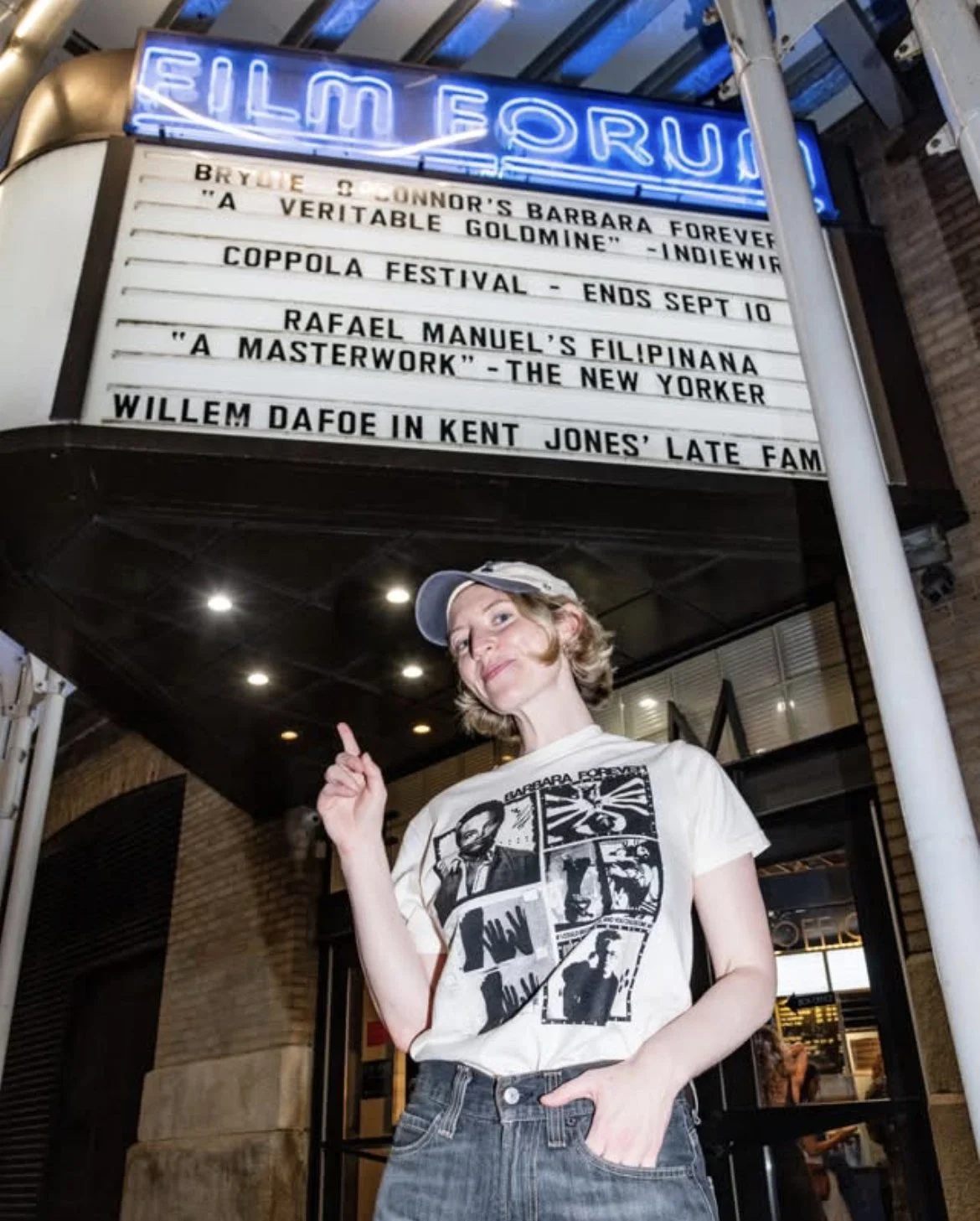
Brydie O'Connor outside the theatrical premiere of Barbara Forever at Film Forum in New York, NY. Photo by Emma Rose Milligan
ECF: In the documentary, Barbara asks, “What if I follow this one life from birth to death? What will that reveal?” And that’s really one of the big thesis questions of the film. So I’m curious: what do you think was revealed? And did your perception of Barbara Hammer change?
BO: I love that quote. I think structurally it sets us up nicely, because we’re redefining what a birth-to-death story is. She’s asking, what if I follow this one life from coming out as a lesbian, and then go back in time, layering time on itself in the way that you experience memory and presence?
I think Barbara’s life and work show us that the more specific you can be about your own life — the intricacies, the mundane moments, the things you’re truly interested in — the more relatable it becomes.
And I think it shows us that our lives, even if we don’t view ourselves as walking history in our day-to-day, are part of history. Our lives as queer people, as women, or as people living outside of cultural hubs matter in that way. I’m from Kansas, and I find it really important to understand the histories of people living in the Midwest.
It’s an alternative method of history making. The personal is historical. That’s what it reveals. And Barbara’s life is a blueprint for how to live a creative life — how to do something you don’t feel like you have a map for. It’s a blueprint for how to be adaptable and bold, and to continue moving forward even if you’re unsure, afraid, or not sure where you fit in. I think that’s what her life and her work — and what she emphasized, valued, and saved as important — tell us.
ECF: I think she was massively influential. Just thinking about the artists I know in Atlanta who make work about the body, queer histories, or pleasure, it’s easy to look at their work and draw a strong parallel to Barbara Hammer. I’m thinking of Haylee Anne and Andrew Lyman, who are both photographers in Atlanta. How has Barbara influenced your work?
BO: I think taking creative risks came very easily to Barbara. She was willing to try things and learn in the process. That came naturally to her, and it’s something that doesn’t come as naturally to me.
When you’re trying to raise funding for a film, there can be this idea that you need to have everything figured out in order to get support. Barbara inspires me to let go of some of that doubt, to learn through the process, to be responsive to my own work, and to create something that feels true and honest and then respond to what I’ve made. In very plain terms, she’s made me more comfortable taking creative risks and understanding that trial and error and trying new things are all part of the process.
ECF: I’d love to talk about one of your other recent projects. This was the short film The Roaming Center for Magnetic Alternatives, which makes the case for the preservation of queer home videos.
BO: I loved making that film so much. It follows The Roaming Center for Magnetic Alternatives, a mobile archive run out of a van or trailer that Kendell Harbin, the founder and archivist of RCMA, began in 2016. I was attracted to this idea of intervening in who gets to create history, who decides what is history, and what gets remembered.
I was thinking about the mechanics of how we expand queer history — how we literally go out and expand our understanding of queer lives, especially at the margins. We have much broader histories of queer life in places like New York and San Francisco and other cultural hubs over the last several decades.
In addition to that being the thematic core of the film, it’s also very experiential. The people digitizing their own materials and participating in the archive are watching their memories be preserved in real time. They’re participating in expanding history while also reliving and engaging with their own memories. It’s a really layered experience.
Kendell also conducts an oral history while the tapes are being digitized, recording the person as they watch and react to the material. There’s something powerful about that hindsight — not everyone in the film is a queer elder, but there is this experience of a queer person watching themselves at another period in their life, 30, 40, or 50 years earlier. We don’t often get to hear queer elders talk about their history in such an immediate, reactive way. And queer history is fraught, while the physical material of VHS tapes is literally disintegrating. So there is a race against time to preserve and expand queer history, and that feels very aligned with both Barbara Forever and my interest in Barbara’s lifelong project.
ECF: Who is the queer archive for? Is it for us? Is it for the future? Is it for the people who made it? Who’s it for?
BO: I love that question. The Roaming Center is such a beautiful example because it’s for both the person who created the material, or who appears in it, and it’s for us. And I consider us a future generation — one of many. There will continue to be more.
For me, the answer comes from a very core desire. When I was coming to understand my own sexuality as a teenager living in Kansas, I didn’t have any reference points. Much like Barbara, I didn’t really know any queer people. There were a couple of people in my class or at school, but I didn’t know any older queer people. I didn’t know anyone who had a partner, or had kids, anything.
Having queer history and images of queer lives is so important because it creates a lineage of what is possible for queer people in a world where dominant culture often excludes queer people from the equation. It’s harder to navigate how to live a life when you don’t have those reference points. Having specific images and experiences of people that future generations may connect to differently, individually or collectively, is incredibly important.
The more we expand queer history, the more it reinforces the idea that queerness is never-ending. Queerness is not one thing. It’s not simply an opposition to heterosexuality or even heteronormativity. It reminds me of the Ocean Vuong quote where he says, Queerness saved my life. It forced me to create new worlds for myself at every step. Expanding the queer archive reinforces this idea that queerness can be anything that we, as queer people, are. It’s endless. There’s no tying it up in a bow, but the broader our understanding of queer lives throughout history — and the more we understand that queer people have always been here — the more we see queer people as part of the fabric of society. And I think that creates a kind of collective resilience in the face of a real systemic effort to erase queer people, and specifically trans people, from public life and public memory.
ECF: What do you think is the state of queer film, lesbian film, and cinema today? From your perspective as a filmmaker and as an artist, what’s going on now?
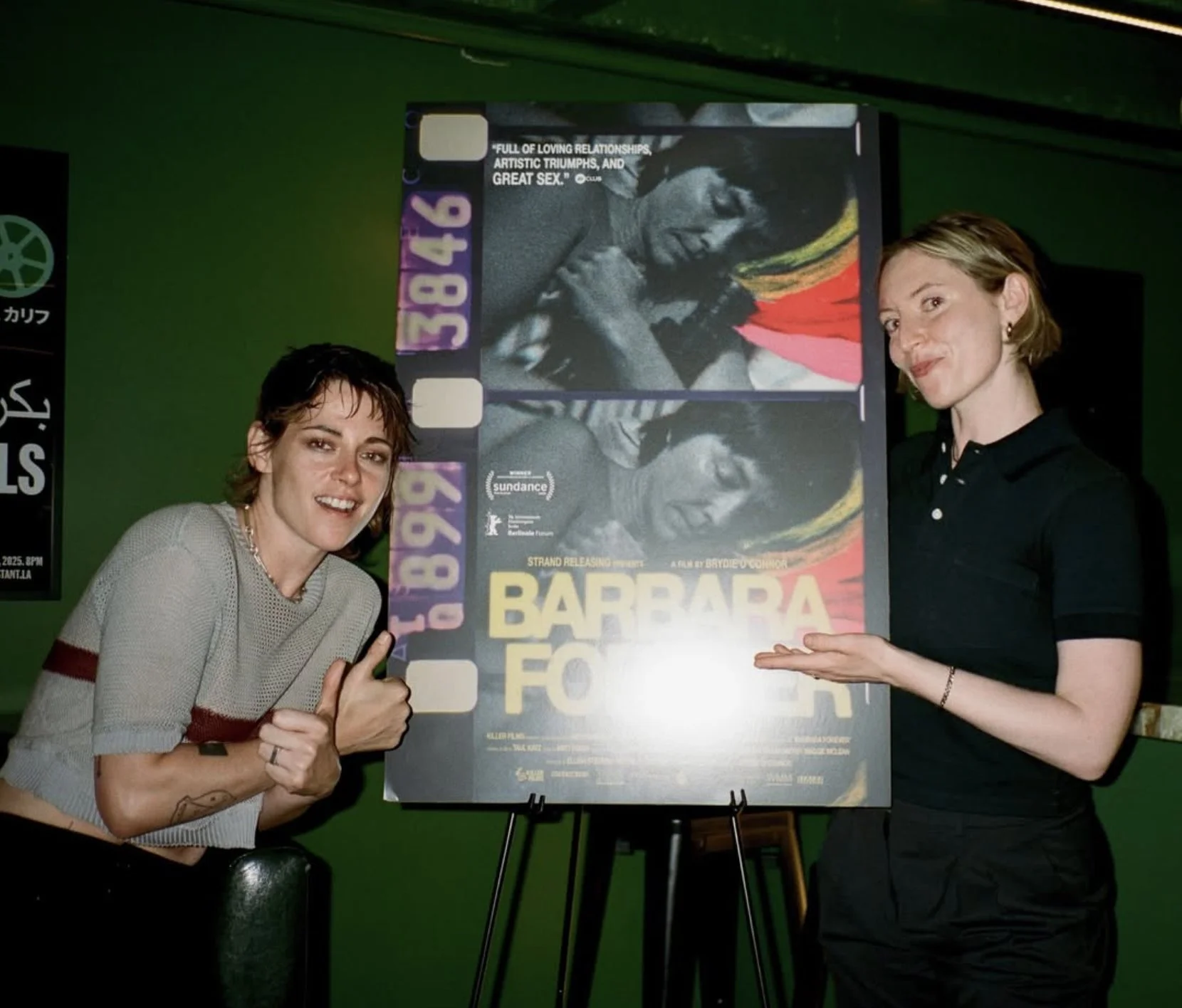
Brydie O'Connor with Barbara Forever Executive Producer Kristen Stewart. Photo by Faye Tsakas
BO: I think if we look at queer representation in media through the lens of popular culture, it reflects the conservative cultural moment that we’re in. The gay show that broke through is Heated Rivalry, and so to me, popular culture is not a good reflection of where we’re at in queer cinema. If we use that as the measure, we give more power to the institutions that have tried to shape what queer representation is and who gets to take risks — these big companies and institutions that have stopped funding queer stories, removed films from their streaming platforms, things like that. So taking the temperature from that space is not accurate, because so much beautiful, radical, authentic, brilliant queer cinema is happening. And it’s happening because of the true grit and perseverance of queer people telling their stories. That is not easy, and that’s not the way it should be, but it is happening. That’s the reality to me.
There’s this film, Bouchra, that I think is one of the most brilliant films I’ve ever seen. It came out this year. It’s animated, but it’s also a very personal film about a lesbian, her relationship with her mother, and her dating life. It’s so brilliant and so personal. I’m such a fan of the film. That should be a film that’s really, really being championed in cinema spaces. But unfortunately, that means a lot of the burden falls on queer filmmakers themselves. There is certainly not enough support for queer film. We made Barbara Forever for so little money. I was working one to two other jobs the whole time. I’m still working a job where I’m going into the office part-time, and I just feel totally drained from going double time all the time. But it is so important to me to make my work.
It’s unfortunate that the answer becomes: work two or three jobs so you can make your work. But I think we can find alternate ways of working. Here’s an example: after one or two shoots, we didn’t have any money to keep filming with a cinematographer. I’m not a cinematographer. I just started filming with a friend’s camera, and that was a way that we could still make the movie, move it forward, and film things that were really important on a much lower budget.
I think that’s the path forward: figuring out how to continue making work when we have something to say — work that feels authentic and specific, even if it’s shot on a DV cam with DV sound — while also balancing our lives, our joy, our relationships with other people, and having a good life, because we deserve that. What’s valuable is finding ways to keep making work without waiting for people to give us permission or have a say in it. I’m certainly not calling on queer people to fall on our own swords.
But when gatekeepers are gatekeeping, I think we can look to people like Barbara Hammer, who made over 85 films that she was proud of and that expressed what she had to say about the world. She felt, to some degree before she died, that people really appreciated that. But more and more people are continuing to discover her work and its value. She was just ahead of her time. So I think it’s really important to keep making the work we want to make and not compromise about that.
ECF: So it sounds like, at best, there’s not enough support, and at worst, there’s straight-up state censorship. But in the face of gatekeeping, maybe the answer is just: make a different gate?
BO: I think the best way to say it is: don’t wait for permission to make your work. That’s what I’m trying to articulate. Don’t wait for people to say yes. Figure out ways to allow yourself to move forward in your artistic pursuits.
Barbara Forever | Fall, 2026: nation-wide theatrical roll out via Strand Releasing
###